

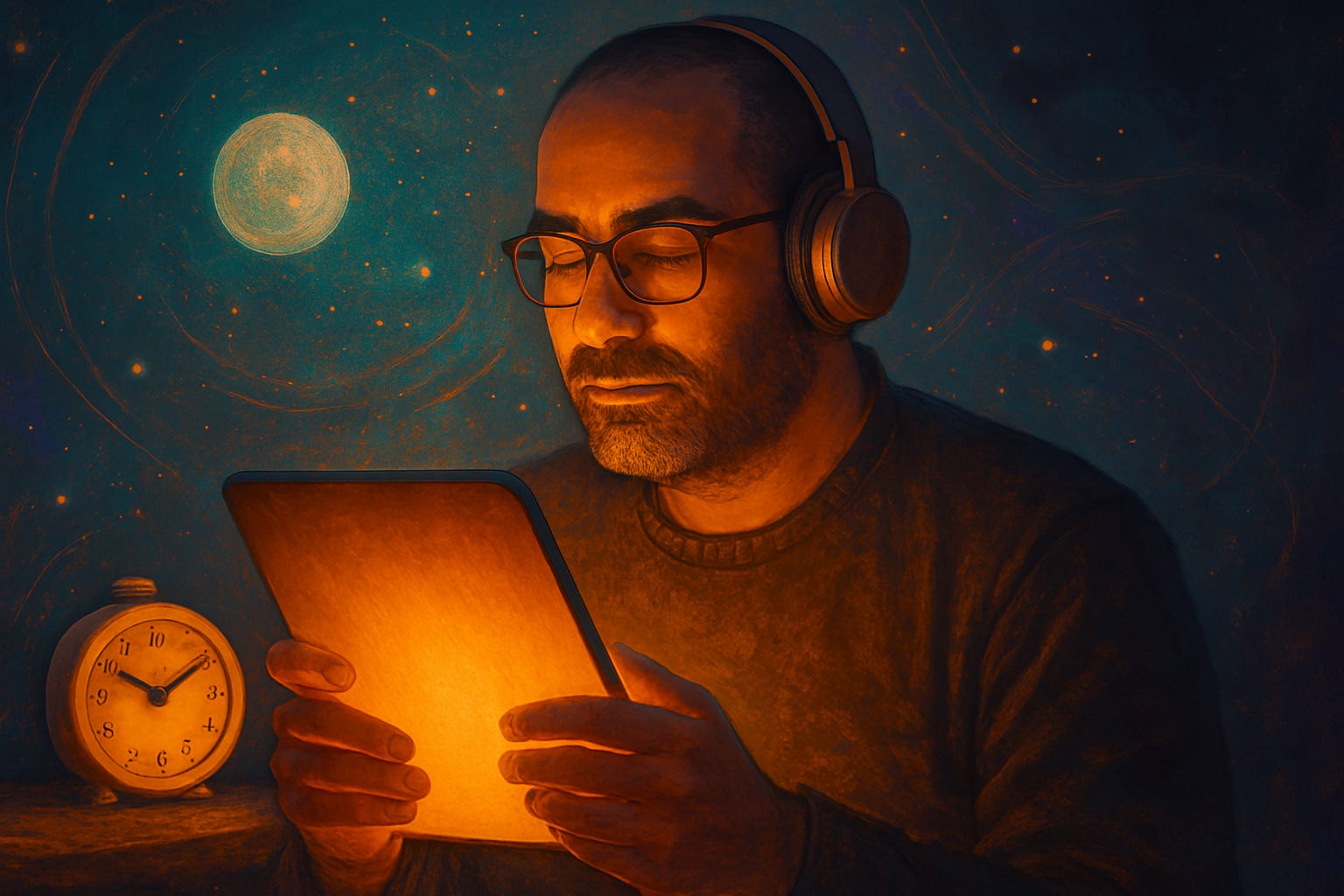
In meditation practice we talk a lot about gathering & collecting our attention. People engage in this kind of training because our attention’s are fragmented, having been habitually captured by:
Internal disturbances : Difficult sensations, feelings, & thoughts
Relational dramas : Being pulled into immature interactions
Environmental distractions : External difficulties & disruptions
Good news: Every time we’re able to either bring our attention back from one of these sources, we become more whole.
Even better news: If we can avoid getting captured in the first place, our attentional integrity remains un-degraded, ready to be employed for deeper purposes.
Social Meditation
Traditional meditation instructions cover working with internal disturbances quite well, so I’ll skip over the basic mindfulness instructions, and just point out that traditional meditation instructions don’t really help us all that much with relational dramas. This is the primary reason I’ve spent the past 15 years emphasizing Social Meditation, as training one’s attention in an explicitly relational context directly extends those same skills into relationships.
That said, when it comes to environmental distractions, particularly from digital sources, I’ve really struggled with attention capture, and no amount of meditation has helped. Turns out, that’s by design!
The Race to the Bottom of the Brainstem
“You can try having self-control, but there are a thousand engineers on the other side of the screen working against you.” ― Tristan Harris
A former design ethicist at Google, Tristan Harris is now famous for pointing out to the United States Congress that today’s “persuasive technologies” are designed to hack our brainstems. In other words, we’re building technologies that are increasingly good at manipulating our evolutionary heritage–all the way down to the most foundational biological systems–in order to nudge us toward actions that serve the bottom-line of tech companies. That’s a problem since Big Tech’s agendas rarely align with our own. We’re at odds with most of our technologies. But honestly, it’s even worse than that.
Nir Eyal, the Technologists who wrote one of the foundational texts on how to capture user attention, Hooked: How to Build Habit-Forming Products went on a few years later to write a book entitled Indistractable: How to Control Your Attention and Choose Your Life. Think about it. This is like a drug kingpin who sells the recipe for their most addictive drug to other dealers, and then goes on to set-up a profitable rehab business for people who become hooked on that product.
Or take the former VP of user growth at Facebook, Chamath Palihapitiya, who in public conference way back in 2017, stated that:
“The short-term, dopamine-driven feedback loops that we have created are destroying how society works. No civil discourse, no cooperation; misinformation, mistruth. This is not about Russian ads. This is a global problem. It is eroding the core foundations of how people behave by and between each other. I can control my decision, which is that I don’t use that shit. I can control my kids’ decisions, which is that they’re not allowed to use that shit.” – ‘Never get high on your own supply’ – why social media bosses don’t use social media
When the people building & promoting digital technologies won’t even let their kids use them, that’s how you know they’re bad. And yet, they continue to do so, having largely given up their agency to the corporations that pay their salaries, and to the notion that if they don’t do the job, someone else will (aka The Multipolar Trap). Big Tech is selling us both the problem, and the solution. My friends, we have truly been left to our own devices.
The Pull
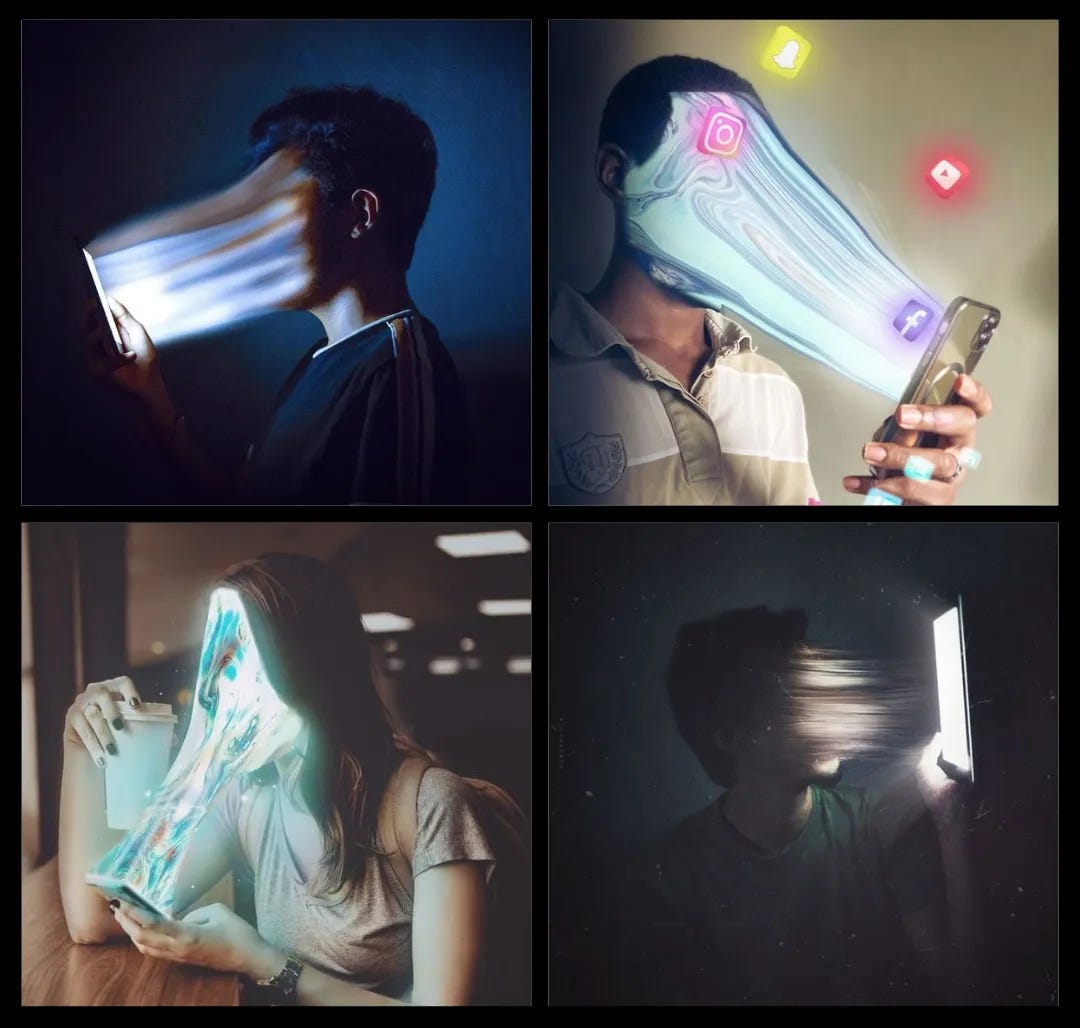
Peter Limberg, in The Fronts of the Pull, frames the core problem in terms of what he calls “The Pull”:
”In unseen warfare, there are battlefronts—or fronts—and I suggest viewing them as physical, relational, and spectacle. Or, to make it more tangible: screens, correspondence, and entertainment.
Screens: Phone and computer
Correspondence: Emails, messengers, and social media
Entertainment: YouTube, gaming, streaming, and porn”
The Pull is that feeling of getting sucked into some one else’s agenda. The problem is when that agenda doesn’t align with our own.
Less good technology–which has “the pull” as it’s primary feature–isn’t limited to a particular form. Rather, it takes many forms. It’s a way of designing–either hardware or software–that we can avoid altogether, or mitigate against the worst effects of, through the use of different kinds of technologies, namely single-focus and hybrid-calm technologies.
Single-Focus Technologies
Monofunctional technologies–or what I prefer to call single-focus technologies–are those technologies that only have only a single function. Things like Clocks, Dumb Phones, Pedometers, eReaders, etc. These are those devices which let you do one thing well, and that’s it.
Single focus technologies were the norm until the rise of personal computing and of smartphones. I certainly grew up in a world, in the 80s & 90s, that was almost wholly populated by single-focus technologies, the most distracting probably being the TV. Now many of us often engaged on our smartphones, while we’re watching TV (aka second-screening).
What Single-Focus Technologies allow us to do is just to relax—for the mind to only be able to do one thing. That doesn’t mean that we will do one thing, it means that we’re avoiding a lot external distractions. Single-Focus Technologies can be a very useful part of a larger strategy for how to work wisely with our digital technologies.
Hybrid-Calm Technologies
A final category of digital technology I would like to add here is hybrid-calm tech. Hybrid-calm tech serves as a bridge between calm, monofunctional, non-invasive, and non-extractive technologies and the hyper-extractive, hyper-digital, hyper-stimulating, and hyper-frictionless technologies of Silicon Valley. These hybrid options feature a crossover combination from both sides that creates a unique kind of integration. The challenge is in finding the right combination for you.
I’ll share a practical example from my own life. In my search for a better smartphone than the iPhone, I found that I had originally swung too far to one extreme. By getting too monofunctional with my smartphone tech (locking myself into vertical operating systems where I couldn’t get the apps I needed to function), I realized I actually required a full-fledged smartphone operating system. However, to “de-hack” myself from the smartphone, I knew I needed to remove the color.
Yes, I know, you can turn your iPhone to grey scale. Did you also know it’s easy to turn back? If that works for you, great, but for me, it didn’t.
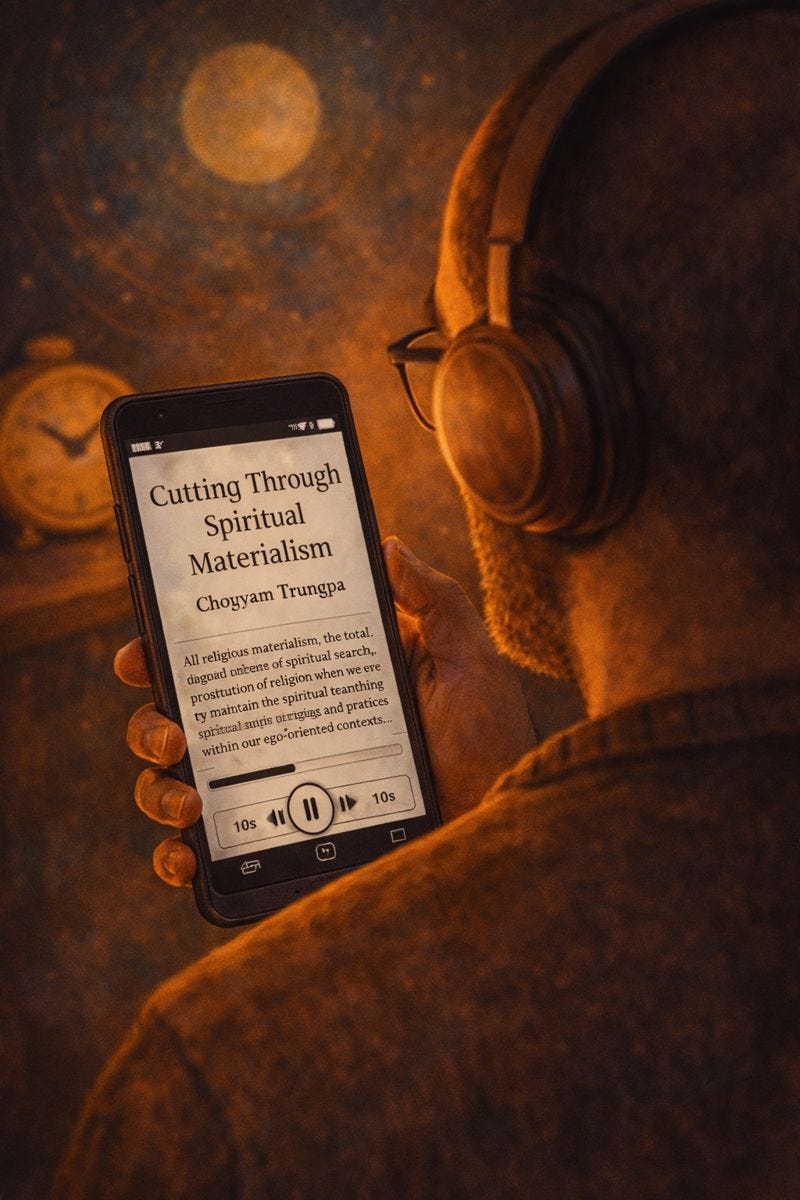
Now, I use a black-and-white E-ink Android smartphone—the Bigme Hibreak Pro. This is a hybrid-calm technology because it runs a full Android operating system (Silicon Valley) but it does so on a Black & White eInk screen (Single Focus & Calm).
What I came to realize, when trying out dumb phones, is that 99% of people use smartphones, and they are so ubiquitous now that we have to assume we will use them as well. To function in my day-to-day life—using an Authenticator app, Google Maps for navigation, streaming music or podcasts, and other essential tasks—I need the ability to download any app. But I don’t want to be hacked by hyper-vivid colors.
In the case of smartphones, I’ve found that color is the main way the brainstem gets hacked. As a trained meditator, I can see this very clearly when I pick up my wife’s iPhone (she is still in transition with her own tech, so I serve as the test subject). When I look at her iPhone, the effect is like digital LSD. It is so immediate and vivid that it grabs my attention and does not let go.
Results of Experimentation
The results have been significant:
1. On my iPhone, I was spending six hours a day.
2. On the Bigme, I am spending around one hour a day.
With the Bigme, I constantly find myself disengaging because it is not that interesting or stimulating. It is good for reading and basic messaging, but the operating system acts slowly enough that there is a level of friction. Apple removed a ton of user friction from the iPhone, which is why it is so easy to get addicted to.
By adding friction back in through hybrid-calm technologies, and finding the right features for your specific needs you can arm yourselves and your communities. It’s becoming more & more possible to do this because of the growing long tail of technological development, where more niche tech emerges for solving these very real hypermodern issues.
In short, by using the right combination of single-focus and hybrid-calm technologies we can gain back hours of our time, using them for self-care, for community enrichment, for something more important than mindless distracted numbing.
What matters to you in your heart of hearts?
What is the most important thing?