

I’ve been quite forthright in my public criticism of Jack Kornfield and Trudy Goodman, two of my closest dharma teachers over the past 2 decades, who from my point of view, failed to live up to their own moral standards by being silent on the genocide in Palestine for over 2 years. That said, I’ve seen some hopeful signs that Jack may be starting to come around on his commitment to silence, as his name was recently attached to this public statement Against Extremist Jewish Terrorism.
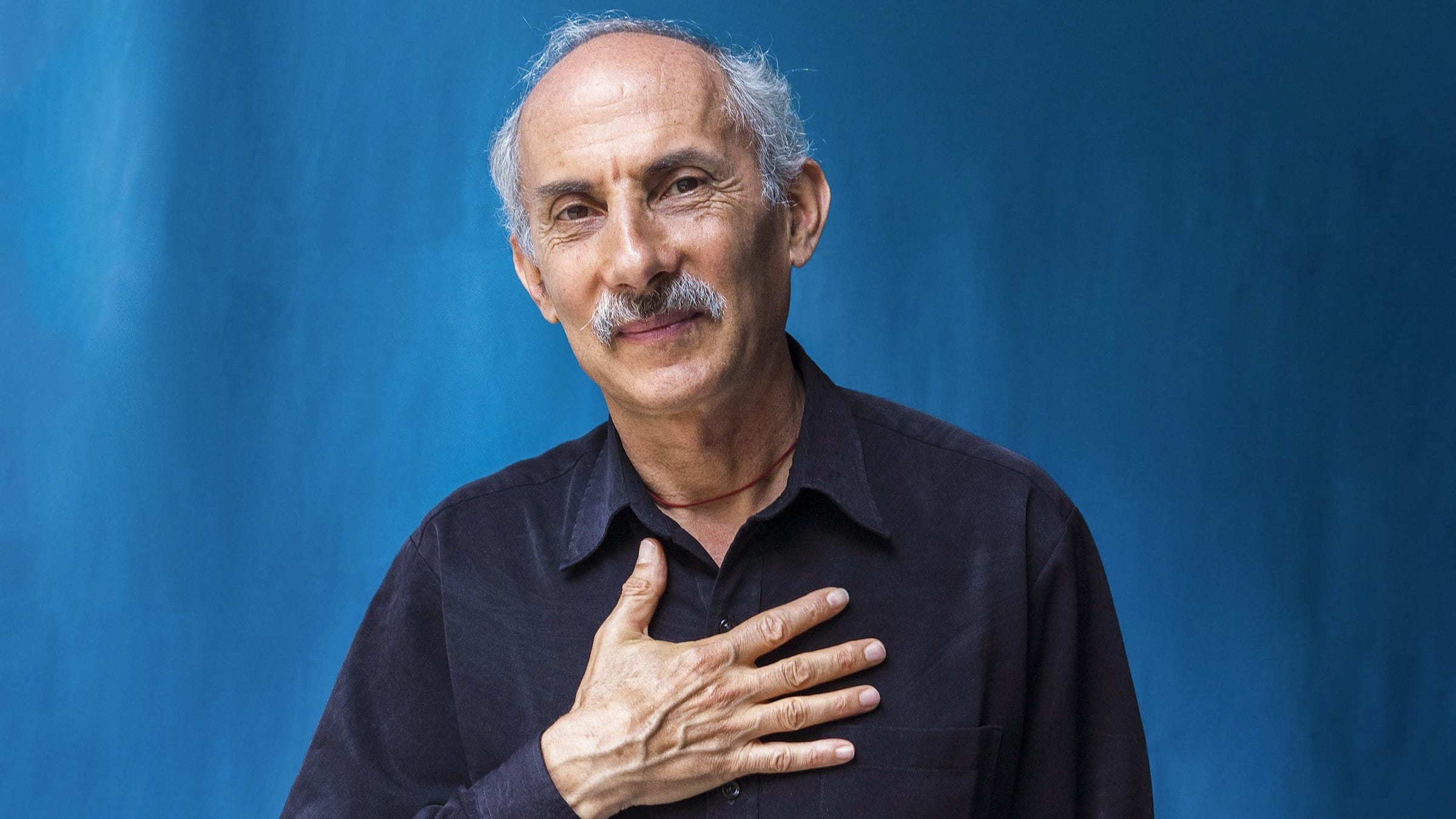
Speaking of Jack, I just recommended his article “Enlightenments” to a number of practitioners in the Pragmatic Dharma Sangha, during a course of training called Modern Buddhisms. In that course we’re exploring the question, “Where am I on the path?,” looking at the question from the point of view of a few different mindsets: the modern achiever, the postmodern pluralist, and the metamodern integrator. As I was reading back through this article–which stands as a great example of the postmodern pluralistic perspective on enlightenment–I was struck by this paragraph, which I want to share with you here, along with some additional commentary:
“My friend Salam, a Palestinian journalist and activist, passed through the gate of suffering when brutally beaten in Israeli prisons. This kind of suffering happens on every side in war. When I first met Salam in San Francisco, he was being honored for his hospice service. I asked him what brought him to this work. ‘One time I died,’ Salam told me. Kicked by a guard, he lay on the floor of the jail with blood coming out of his mouth, and his consciousness floated out of his body. Suddenly, he felt so peaceful—a kind of bliss—as he saw he wasn’t that body. ‘I was so much more: I was the boot and the guard, the goat calling outside the walls of the police station. I was all of it,’ Salam told me. ‘When I got out of jail, I couldn’t take sides anymore. I married a Jewish woman and had Jewish-Palestinian children. That is my answer.’ Salam explains, ‘Now I sit with people who are dying because they are afraid and I can hold their hands and reassure them that it’s perfectly safe.’ He awakened through the gate of suffering.” – Jack Kornfield, Enlightenments
First off, we are hearing Salam’s voice through Jack, and I don’t really know how much of this is what Salam said, versus Jack’s interpretation of Salam’s story. It is important to note that when someone takes the liberty of speaking for someone else in a book or article. That said, let’s give Jack the full benefit of the doubt, and assume that Salam—a Palestinian journalist and activist—did in fact, have a profound spiritual awakening, which led him to the conclusion that he couldn’t take sides anymore.
Ok, fine, but I want to strongly push back against the idea that everything we conclude about our awakenings is somehow correct. Sometimes we learn the wrong lessons from awakening, and we can only correct those misperceptions with time, and through relationships. Here, I think both Jack and Salam have concluded the wrong thing about Palestine and Israel.
On the one hand, I’m happy for Salam, that he woke up to the universal truth. But the mistake he makes here is to abandon the relative. Jack, knowing better, allows him to abandon the relative truth, probably because it serves Jack to do so—to view this situation through a both-sides are equal lens, rather than to see one side as actively oppressing the other (with the support of American tax dollars).
But the reality of the Palestinian situation, as it has been for over a century, is one of profound power asymmetry. It is the reality of an apartheid state of checkpoints, digital surveillance, wrongful imprisonment, torture, land theft, ethnic cleansing, and genocide. And these observable & documented harms arise asymmetrically from one side–from Israel–a country which is are holding almost all of the keys here. I use the term “key” very intentionally here, as many Palestinian families still have the physical keys to the homes that were taken from them in 1948, as they continue hold out hope that they may one day be able to return home.
I don’t hold it against Salam that he married a Jewish woman and had Jewish-Palestinian children—that’s totally fine, and even a quite lovely story. But to conclude that “there are no sides” is to confuse a universal awakening with the specific, personal conditions on the ground in a profoundly unequal Palestine. It may provide quite a bit of relief to no longer feel caught in constant warring, but the reality is that this is not a “conflict” between equal sides.
“We have to remember both our Buddhanature and our zip code.” – Jack Kornfield
Awakening doesn’t change those specific truths that we have to wrestle with daily, rather, it changes how we relate to them. Spiritual oneness enables us to stop struggling for a moment, and that’s a great relief, but if we don’t pick the struggle back up, this isn’t wisdom, it’s acquiescence.
From the non-dual perspective, multiple things can be true: on one level, there are no sides, while at the same time, Salam continues to live inside of an apartheid state that views him (and now his children) as racially inferior. Given that this article was written in 2010, I’m left wondering if Salam is still alive–Israel has killed ~260 journalists, in the largest assault on journalists that we’ve seen in modern times. How many of Salam’s colleagues are now dead? How many of his family members do you think were killed in Gaza?
From a relative standpoint, it makes complete sense to push back against these ongoing injustices, and to actively fight for a more just future for Palestinians. And one can do so in an awakened way, but only by calling on fierce compassion.
“There are plenty of times we need fierce compassion, fierce love. Just like when a child does something that is very harmful and we say ‘No!’, we need some kind of fierceness. There's a certain kind of fierceness that can look like anger and has that fire of anger, but the difference is that it's not blinded with reactivity.” – Mark Coleman
As fierce compassion I find myself enraged by Jack, and so many other “Boomer Buddhists,” that insist on awakening being non-confrontational. This notion that awakening resolves all conflict and brings one beyond aversion, violence, and aggression is deluded. No where in Jack’s article on Enlightenments did he describe the Palestinian-American man, who woke up and realized he was in an oppressive environment, where even his wisest teachers were upholding a harmful ideology of Jewish supremacy. Where is the modeling of Enlightened Rage or Spiritual Warriorship in Jack’s flaccid description of enlightenment?
It is, itself, a violent move to conflate the universal and the personal. Spiritual silence arising out of conflict aversion is not admirable. It is not wise, and it is not compassionate. It is rooted in fear, and is self-serving. I can understand that Jack, having experienced quite a bit of early childhood trauma and abuse, would seek out a path that allows him to avoid the kinds of things that have scarred him. But as someone who also claims that healing is an integral part of the journey–and who indeed who made his name on this claim–I expect more from him here. I believe that dharma teachers who understand the non-dual perspective and claim they aren’t afraid to enter into the reality of relative truth—which necessarily includes power asymmetries, genocide, & ecocide—should be held to their own high standards.
We cannot avoid harm by living in spiritual fantasies–After the Ecstasy, the Laundry right?–because spiritual fantasies don’t help the people who are being marginalized or oppressed. Jack, of all people, could know this, and perhaps when it comes to Palestine, he has finally started to learn this lesson?
This article, by Palestinian writer Hamze Awawde, does a lot to flesh out the contemporary historical details regarding the "peace industry" and how it has failed Palestinians:
"I’ve written before about the long, slow rot of the peace-industrial complex—how a noble cause mutated into a donor-pleasing economy that sold fake hope and ultimately radicalized the extremes. I spent twenty years inside that machinery. I helped build it. But understanding that structural rot requires understanding how the machinery was wired in the first place. When the paradigm finally shattered, the industry didn’t disappear. It ran a PR campaign."
https://hamzeawawde.substack.com/p/the-good-palestinian-playbook-how
Thank you for writing this! Too much emphasis on individual salvation leaves us with a nice, neat fit with a neoliberal capitalist-and-colonialist-compatible worldview. What's the difference between this and spiritual bypass? I don't believe we can afford that anymore, whether we're talking about genocide, ecological issues or economic inequality.